Kurta Product Photography
The kurta is India's most-listed apparel category on e-commerce platforms. From casual cotton kurtis to heavily embroidered silk kurtas, each requires specific photography techniques to show its full appeal.
Start Your Free Shoot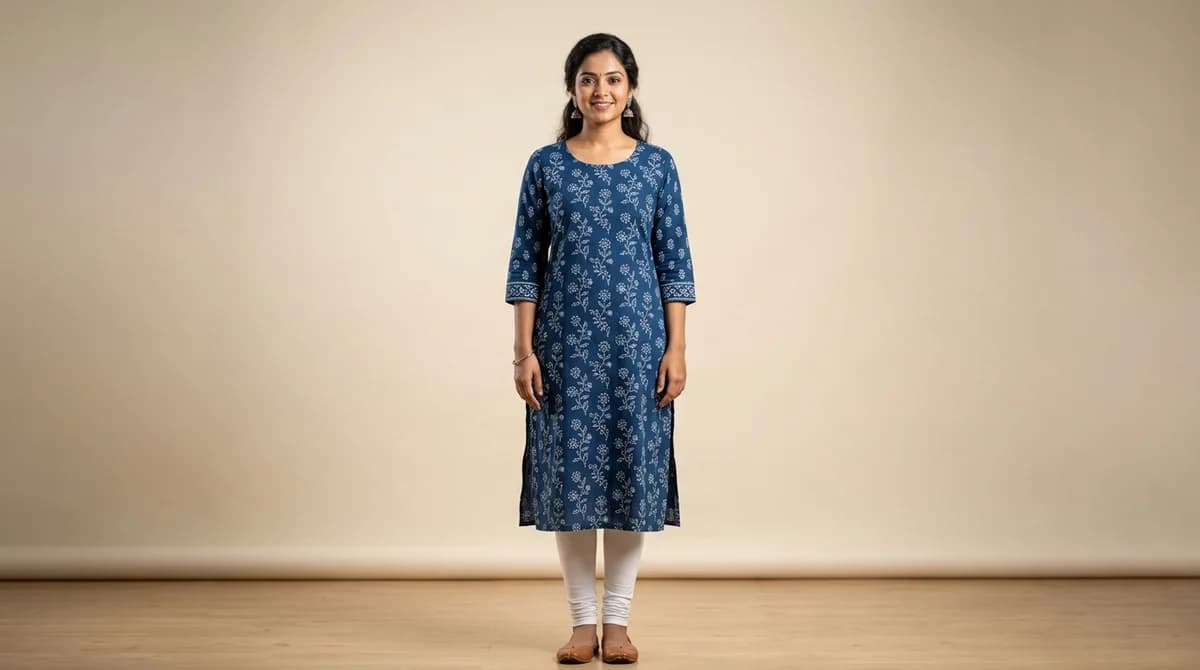
The Complete Guide to Kurta Product Photography
Kurta photography is uniquely demanding because the category spans everything from a Rs. 299 cotton daily-wear kurti to a Rs. 15,000 hand-embroidered silk kurta — and each requires a completely different photographic treatment. For printed cotton kurtis, the priority is showing the full print pattern without drape distortion, which means a flat-lay secondary image is essential alongside the primary model shot. For embroidered kurtas, the neckline yoke is the purchase-driving detail; a macro close-up shot of the embroidery thread work, sequin placement, or mirror work at high resolution is what converts browsers into buyers. The biggest mistake sellers make is photographing all kurta silhouettes (straight-cut, A-line, anarkali, asymmetric) in the same static pose — the pose should adapt to the silhouette to show what makes each cut different. ShotRoom's AI detects the kurta sub-type from your garment photo and selects poses that highlight that specific silhouette's defining feature.
Photography Challenges for Kurta
Kurtis have varied silhouettes (straight, A-line, anarkali, asymmetric) — the wrong pose obscures the cut
Embroidery and block-print details require close-up shots that flat photography misses
Cotton kurtis appear limp and shapeless in flat-lay — they need a model to show the actual drape and fit
Dupatta styling can dominate the photo if poorly composed — the kurta must remain the focus
Dark-coloured kurtis (navy, black, maroon) lose texture detail against dark backgrounds
How ShotRoom Handles Kurta Photography
- Generates on-model front and back shots that show kurta silhouette and length accurately
- Creates embroidery and print close-up images automatically based on detected garment details
- Selects optimal model poses that highlight the kurta's neckline and hemline
- Produces flat-lay shots with consistent white backgrounds for marketplace compliance
Kurta Photography Tips
Use a front-model shot as the primary image — it shows the kurta's silhouette, length, and fit clearly
Include a close-up of the neckline or sleeve embroidery as a secondary image
A white or very light background makes the kurta's colour and embellishments stand out
If the kurta comes with a dupatta, style it naturally over one shoulder for the model shot
For printed kurtis, include a flat-lay shot that shows the full print pattern without drape
Frequently Asked Questions
What is the best way to photograph a kurta for online selling?
The best kurta product photo combines three image types: (1) a front on-model shot showing the full silhouette, (2) a detail close-up of the neckline or key embellishment, and (3) a flat-lay showing the print or fabric texture. This combination answers buyers' most common questions about fit, detail, and fabric in three images.
How do I show kurta embroidery detail in product photos?
Embroidery detail needs macro close-up photography or a high-resolution crop of the embellished area. The key is even, diffused lighting — harsh direct light creates shadows that hide embroidery texture. ShotRoom automatically generates detail close-up shots for kurtas with detected embroidery.
Should I photograph kurtas on a model or as flat-lay?
Both. On-model is essential as the primary image because it shows fit, drape, and how the kurta actually looks when worn. Flat-lay works well as a secondary image to show print pattern, fabric texture, and the complete garment spread. Listings with both on-model and flat-lay images consistently see lower return rates.
Sell Kurta On These Marketplaces
Marketplace guides for Kurta:
Get professional Kurta photos today
Upload one garment photo and receive a complete professional photoshoot in minutes. No studio, no photographer, no hassle.
Get Started Free